

Global supply chains are entering a period of structural volatility, according to a World Economic Forum report.
Businesses are reevaluating how they plan and invest, prioritizing responsive networks. Such adaptability is a key competitive advantage, enabling importers to navigate uncertainty while maintaining reliable access to goods and markets.
The White House announced adjustments to U.S. imports of semiconductors and related equipment to support domestic industry and strengthen supply chains.
This guidance clarifies policy direction that could influence sourcing strategies, trade discussions, and the treatment of high‑tech products entering the U.S. market.
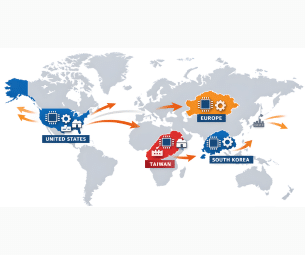

As we move into 2026, supply chains are being shaped by tariff shifts, geopolitical changes, technology adoption, labor dynamics, and evolving inventory strategies, leading importers to rethink logistics decisions.
Despite these challenges, a global survey of logistics leaders shows optimism that trade activity will meet last year’s levels, highlighting focus on resilience and diversification.
The administration is continuing to implement new tariffs on imports from eight European countries to address national security and broader trade policy objectives.
These measures underscore the importance for importers to closely monitor tariff classifications and cost impacts, as such changes can influence landed pricing and sourcing decisions.


Imperative Logistics has been named by Global Trade as one of the Top 50 3PLs for 2025 in the Border Breakers category, recognizing our expertise in navigating complex trade compliance and delivering multi-country freight solutions.
This honor highlights our dedication to providing reliable support that helps our customers adapt and stay resilient in a changing trade environment.
- IEEPA Tariff Case: The Supreme Court issued several rulings recently, but the IEEPA tariff case was not addressed. With a three-week recess approaching, a decision is unlikely before mid-February. The next non-argument day is February 20, providing extra time for importers to prepare.
- Tariff Refund Preparation Window: Importers can review their ACH (Automated Clearing House) refund information and consider whether they would like assistance with Post Summary Correction (PSC) filings if refunds become available. Being ready now can save time and reduce stress later.
- Tariff Announcements: Recent public statements about tariffs, including those related to Iran and some EU countries, are not official policy. Tariffs only take effect when issued through an Executive Order under the appropriate law.
- What This Means for You: Over the past year, public tariff threats have frequently signaled intent without enforcement. Until formal Executive Orders are issued, no operational changes are required. Staying informed and prepared remains the best approach.
- Tariff Refund Preparation: We help you review and organize ACH refund information and assess whether Post Summary Correction (PSC) filings may be needed, so you’re ready if a refund pathway opens.
- PSC Filing Support: Our team can manage PSC filings on your behalf, including careful review of valuation, origin, deductions, tariff application, and Section 232 derivative considerations to help reduce the risk of CBP follow-up.
- Customs Expertise: We combine hands-on experience with deep knowledge of trade regulations, identifying gaps in documentation and ensuring filings are accurate, complete, and defensible.
- Trusted Expertise: With substantial refunds at stake, we handle every filing with precision and care, providing you confidence that your submissions are complete and compliant.
Have questions about how these tariff changes affect your shipments? Our team of experts is ready to provide guidance, please Contact Us anytime.