
- Canada Section 338 Product List Revised: The administration has revised the list of Canadian products subject to additional duties under Section 338. Certain products were removed from the 50% additional duty list, while other products were added. Importers should review the updated HTS classifications to determine whether their products are affected.
- Section 301 China Product Exclusions: U.S. Customs and Border Protection (CBP) has issued updated instructions for five Section 301 product exclusions, addressing revised Harmonized Tariff Schedule (HTS) classifications and ACE processing requirements.
- Robotics, Industrial Machinery and Wind Turbines: The administration is pursuing trade negotiations over imports of robotics, industrial machinery, and wind turbine components rather than imposing new duties at this time. Existing steel, aluminum, and copper duties remain unchanged.
- International Mail Entry Deadline Moved to January 20, 2027: CBP extended by 90 days the deadline for international postal shipments subject to Section 201, 232 or 301 duties, or partner government agency requirements, through the new Entry Type 13 process.
- Polysilicon Duties Begin December 4: The previously announced Section 232 action on polysilicon and its derivatives, including a 15% duty and a Minimum Import Price program, takes effect for goods entered on or after December 4. Importers of affected solar and semiconductor inputs should review classifications and documentation ahead of the effective date.
Los Angeles and Long Beach port employers and the union representing 250 watchmen have extended negotiations through Friday to avert a potential strike.
We’re expediting container pickups and evaluating alternate routes for shipments in transit.
Air Cargo Demand Picks Up Ahead of the Holidays: Global air cargo demand increased 7.7% year over year.
With demand increasing, businesses planning holiday shipments should consider booking air cargo space early to secure capacity.

The U.S. added three Chinese genomics companies to the UFLPA Entity List as part of ongoing efforts to combat forced labor.
These measures support greater supply chain accountability and promote more transparent, responsible sourcing practices.
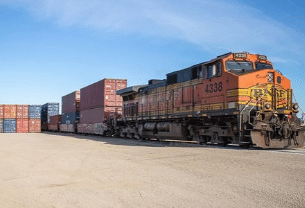
U.S. rail traffic increased 7.8% year over year, with intermodal volume rising 11.3%.
As demand grows, our team can help customers coordinate rail and truck transportation to keep freight moving efficiently and reliably across North America.
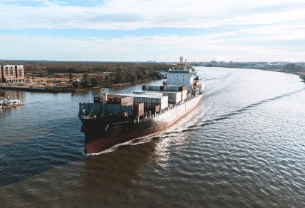
The Georgia Ports Authority is planning a new container terminal that will increase the Port of Savannah’s capacity.
The expansion could provide importers with additional options when planning East Coast shipments and evaluating their distribution strategies.
The U.S. Department of Transportation brought together more than 100 industry representatives to discuss improving freight data sharing and coordination.
Visibility can help businesses anticipate delays and make informed supply chain decisions.


Holiday retail sales are expected to surpass $1 trillion for the first time, with the National Retail Federation forecasting 4.2% growth this season.
Strong consumer demand could keep supply chains busy through year-end, making early planning essential.
- Tariff Classification & Country-of-Origin Review: Our team can help review product classifications, country-of-origin information, and applicable trade requirements to support accurate customs declarations and identify potential duty considerations.
- Customs Documentation & Entry Accuracy: Our customs brokerage professionals help manage entry documentation, review filing requirements, and support compliance with changing CBP regulations.
- Transportation Planning & Flexible Solutions: From expedited shipments to global forwarding and cross-border transportation, we help customers evaluate routing options and adjust transportation plans as market conditions change.
- Shipment Visibility & Proactive Communication: Our teams provide shipment updates and coordinate across transportation and customs processes to help customers anticipate potential delays and make informed decisions.
When volatility impacts global trade lanes, from geopolitical shifts to disruptions across the Middle East and beyond, having the right logistics partner is critical. Our team develops proactive, agile transport strategies to keep your cargo moving, no matter the conditions.
Contact us to explore how we can strengthen your supply chain for what’s ahead.
As tariff and global trade conditions continue to evolve, we’re gathering customer insights to better understand the impact and how we can best support you.
Please take a moment to complete this brief survey.